Reading travertine
How the cut, the fill and the finish change the same stone into three different materials.
Interiors, , 1 min read
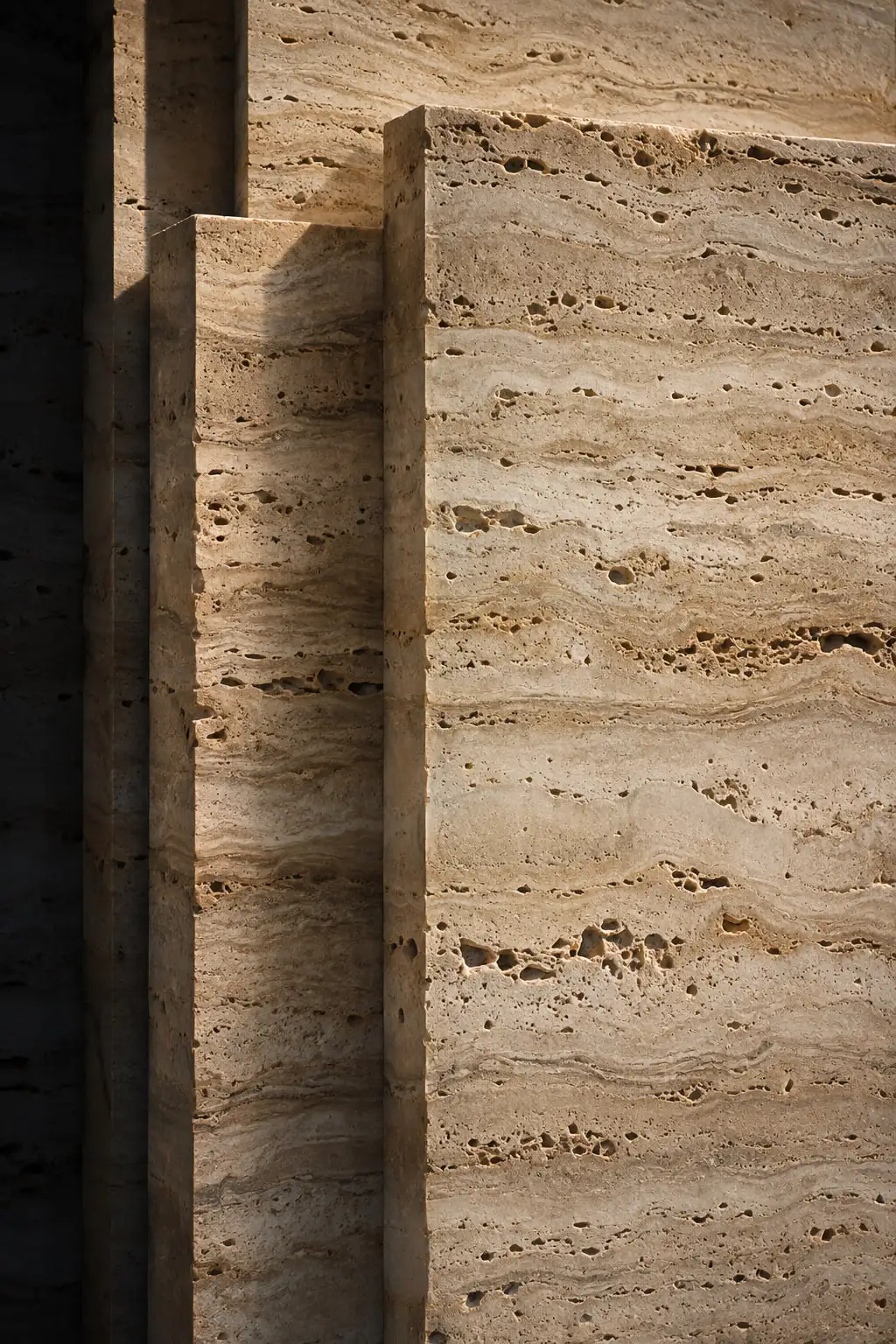
Travertine forms in layers around mineral springs, and every slab keeps the record. The bands are time. The small voids are where gas and plant matter once were.
The cut
Cut across the bedding and you get long, level stripes that make a wall read as courses of masonry. Cut along it and the same block gives soft clouds, quieter and more even. Neither is better. They are different rooms.
The fill
Pores can be left open, filled at the quarry or filled on site. Open pores catch shadow and feel mineral underfoot, but they collect dust and need care in wet rooms. A filled surface is easier to live with and flatter to look at.
The finish
Honing leaves a matt surface that takes daylight softly. Polishing raises the colour and adds reflection. Outdoors, a brushed or tumbled face gives grip around water.
Ask to see a full slab, wet and dry, in the room where it will go. A sample the size of a postcard cannot tell you what a wall will do.